Monday, January 25, 2016

Cracking the Code of the Blockbuster Imperative

I can't tell you how many times I've been in a comic book or collectibles shop and overheard a conversation about how badly a studio handled a project beloved from another medium, or how another project would have been a better idea.

Fans have definite opinions about these things but they are infrequently consulted because they rarely back-up those opinions with trackable purchase power.

In researching the 14th episode of the Pod Sequentialism podcast, I crunched numbers from  a bunch of different sources (including a great article by the Hollywood Reporter's Pamela McClintock) and came across a pattern that can't possibly be lost on the studios.

In fact, it's an actual formula for box office success that has thus far only experienced a 5% margin of error. I feel like Christian Bale in The Big Short; like I've combined enough data to reach a conclusion that has to be worth a fortune to the right people. But, instead of knocking on studio doors, or writing my own article for The Hollywood Reporter or Variety, I'm imparting this knowledge to you, my listenership.

Stream it here on the Meltdown Comics site.
Or Subscribe here via iTunes.

Tune in every Sunday for a new episode of Pod Sequentialism with Matt Kennedy!

Monday, January 18, 2016

Is Cosplay Killing Comicon?

Actress Milynn Sarley, my guest on Episode 12
As a regular attendee to comic conventions, and as someone with friends in the industry who rely on convention income I noticed a tendency for retailers to bash cosplay.

Comic book shops now definitely don't look like they did when I was a kid. Until the 1990s most comic shops were dark rows of long boxes filled with poly-bagged back issues, walls decorated in matrixes of mylar-covered first appearances, and windows covered in promotional posters that prevented almost any light from breaching the shop until someone opened the door. And we wondered why the only women were aggravated moms whose teenaged boys didn't hear the car horn because they were arguing over the merits of the Teen Titans over the X-men.

But for the last 25 or so years, slicker, brighter and more versatile retail design has transformed the hobby from a collection of library/caves into pop-culture superstores. Back east, Newbury Comics was the first to diversify a newsstand mentality into a punk rock record store with cool t-shirts, toys AND comics. In Los Angeles, Golden Apple's original Melrose Ave location was the celebrity hangout where one might bump into Los Bros Hernandez or go to a Neil Gaiman signing. Other smaller shops on both coasts found a niche that their audience enjoyed in addition to comic books and gave it visible real estate–Comics, Legends, and Lore where I worked as a teen had a full wall of gaming miniatures and was THE role-playing Mecca of the North Shore of Boston. Fantastic Store in Hollywood had a gigantic, paper mâché Thing hanging over it–and Tony Scott picked it as the comic shop location for his Quentin Tarantino scripted masterpiece, True Romance.

The competition noticed and the now places like Meltdown Comics and Collectibles are almost the standard, or at least the ideal toward which new shops strive. Bright without teetering completely over the edge of information overload, and hosting weekly events for audiences that probably don't even read comics.

Bob Violence, from the pages of American Flagg!
In other words, comic shops have always evolved to survive, so it's always bothered me that cosplayers have repeatedly been blamed for "killing comicon" by retailers who haven't found a way to cater to their new, visible attendee base. I've always enjoyed seeing people wear their fandom, but I haven't dressed in character since BosCon '86, when my mother sewed a Bob Violence (look to the left) costume and let me spend a weekend (unsupervised!) with my older peers at a fancy hotel in Boston. So I called in my favorite cosplay expert: Milynn Sarley!

Milynn is a co-creator of Team Unicorn, and has acted in TV shows and co-hosted gamer and entertainment programs.

She's also beautiful and smart, and one of the nicest people I know.

I sincerely apologize that this one wasn't a video podcast.

Click here for the live-stream link!

Click here for the iTunes page for Pod Sequentialism with Matt Kennedy.

Monday, January 4, 2016

Stranger than (Dr.) Strange

Howard Hallis: World Authority on Dr. Strange
Happy New Year!

With the Winter Solstice exactly thirteen days behind us, we thought it perfect timing to launch Pod Sequentialism with Matt Kennedy's interview with Dr. Strange expert Howard Hallis. The two dig deep into the occult origins of comic book magic, the Crowleyan underpinnings of everybody's favorite comic book sorcerer–and a whole lot more!

Howard Hallis has the largest independent collection of Dr. Strange ephemera. From the comics to original art and merchandised paraphernalia, Howard has been adding to his ever-expanding Dr. Strange Museum for nearly four decades. But Howard is no stranger to the mystic world of true magick, either.

Hallis has a long curriculum vitae that spans an art degree from UCLA (studying with Paul McCarthy and Mike Kelley), a music career with the seminal Yidcore band Gefilte Fuck, recording the death of 60s psychedelic guru Dr. Timothy Leary for posterity via live stream video, and the pioneering lenticular work, The Picture of Everything–a gigantic, 15-foot-high drawing of ALL things pop culture (covered in the pages of Wired magazine).

It's a history lesson sure to make Benedict Cumberbatch proud!
Click here for a live stream, or subscribe to the Pod Sequentialism podcast on iTunes.

Tuesday, December 15, 2015

How to Build Your Own Asylum Doing What You Love

Frank Forte at San Diego Comicon
Frank Forte is the publisher at Asylum Press, and as such has released over 25 titles, some of which he has written and drawn himself or in collaboration. He's a frequent guest editor of Heavy Metal Magazine, which is a dream job for any comics geek who came of age in the 80s.

He has also worked in animation for the Emmy Award winning Bob's Burgers, the Oscar Nominated Despicable Me 2, a host of Lego films, including Lego Star Wars, as well as the comic and pop culture projects Marvel Heroes 4D, and Hi Hi Puffy Ami Yumi. He co-created The Cletus and Floyd Show with Gene McGuckin, and Sickcom with Robert S. Rhine, which found infamy at Spike and Mike's Sick and Twisted Festival Of Animation. He's also a gallery exhibiting artist, and voracious blogger.


In other words, Frank Forte is one of the good guys.

Matt Kennedy and his guest Frank Forte reveal how to launch your own company, and talk self-publishing, changing careers, and how to pay the bills while doing something you love on Episode 9 of Pod Sequentialism. It's not all about the benjamins, but it's good to know what to expect in the competitive comic book market. Tune in and find out!


Friday, December 11, 2015

The Ubiquitous Boombox

laluzdejesus.com/boombox/
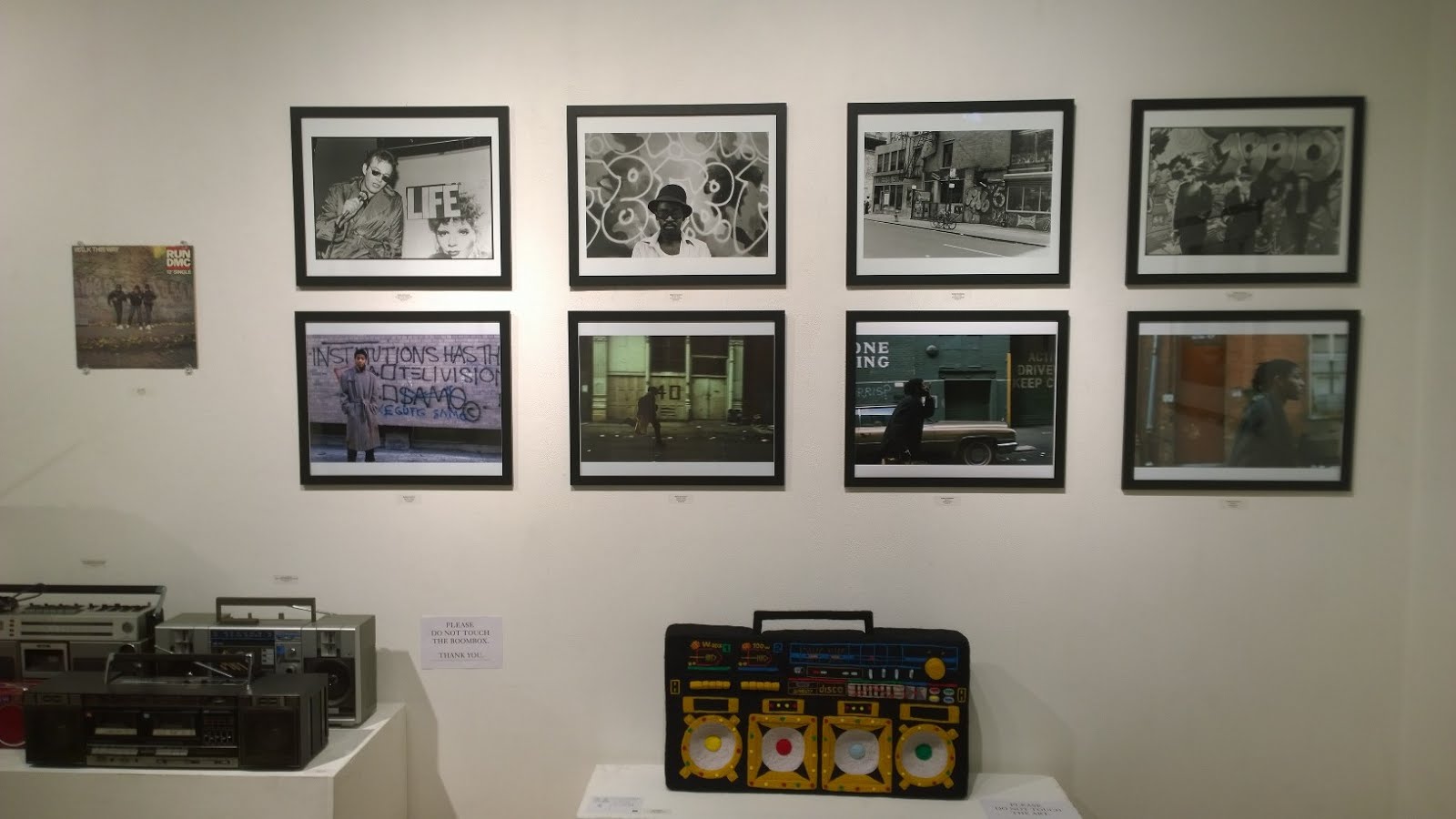
Back in Episode 6 of the Pod Sequentialism podcast, in discussing how graffiti was so closely associated with Hip Hop culture, Mason and Matt mentioned the Boombox as another pivotal catalyst in the birth of Hip Hop. They also mentioned the that Matt would be curating a boombox exhibition at La Luz de Jesus Gallery. That show, titled Boombox Creators, displays 30 classic boomboxes and a lot of ephemera connected to the boombox and Hip Hop in general.

The fine folks at Hi-Fructose Magazine gave some wonderful coverage to what started as a little boombox vanity project, and the new goal is to get this show into the Brooklyn Museum. Miles Lightwood and Matt Kennedy spent about two years putting this show together, and with some help from Brian Fox and Trevor Baade pulled it off swimmingly. The Boombox Creators Exhibition is the first to focus on the boombox as a fine art object. The idea was to present the notion that the boomboxes themselves are perfect without painting on them or otherwise altering them from the commercially marketed home electronics device that they were originally intended to be. Included are classics like the JVC M-90 and the Sharp HK9000 (which is the only boombox in the permanent collection of the Smithsonian Institution), and a lot of other amazing pieces of machinery. Also included are original, production designs by Richard Culbertson for boomboxes that never went into production.

Throughout the exhibition are info cards dedicated to the designers behind the boomboxes on display and for sale.

The exhibit runs through the holidays, and closes on January 3rd–when there will be a closing party with breakdancers and a bunch of the boomboxes will be tuned to an FM transmitter that will broadcast the mix tape produced specifically for the show (and limited to 100 copies). It's highly recommended that you check out the amazing collection of factory sealed cassette tapes, LPs and photography from the boombox era by Bobby Grossman, Ed Colver, and Lyle Owerko alongside new art pieces by The Panik Collective, Sean Steppanof, and Josh Gardner.

See the installation photos, and come visit the show in person at La Luz de Jesus Gallery, 4633 Hollywood Blvd. Los Angeles, CA 90027.


Sunday, December 6, 2015

Getting Steampunk'd with Ave Rose

Ave Rose is a singer, a performer, a publisher, a writer, a designer and an exhibiting fine artist. With collaborators Trieops Treyfid, Cig Neutron, and Rannie Rodil she put together the Aliens in L.A. book and performance project, and via Ink Pen Mutations Press she is a self-publishing mogul specializing in illustrated counter-culture story-telling. As the one-to-beat on GSNTV's Steampunk'd, she became the posterchild of the post-gothic industrial set.

This makes her a pretty great interview by anyone's standard.

This week on Pod Sequentialism, Ave Rose and Matt Kennedy discuss the many hats artists must wear (both literally and figuratively), and what it was like to be the star of a Reality TV Series.

Monday, November 30, 2015

How Do You Get More Girls to Play D&D? You Let Them.

Satine Phoenix's New Praetorians
My guest this week on Pod Sequentialism is Satine Phoenix, a comic book illustrating gamer-girl who was dubbed the "Queen of D&D" by Time Magazine. She initially found fame in the adult film industry but soon after  went mainstream via her web series I Hit It With My Axe and her weekly gaming series DnDMelt.

I've known Satine for quite a few years and seeing her transition from a fan of comics into a published professional has been very personally gratifying, but it's also a great template for other young people to follow in the quest for identity and professional success.

This is one of my favorite episodes so far because there is a wonderful uplifting message about the comics and gaming community as it currently exists. The real mindblower here was in hearing from a woman's point of view that girls have always been interested in gaming, but the boys in their lives weren't very welcoming to the idea.

This episode is broadcast without commercial interruption and it's one I think a lot of people can learn from.